
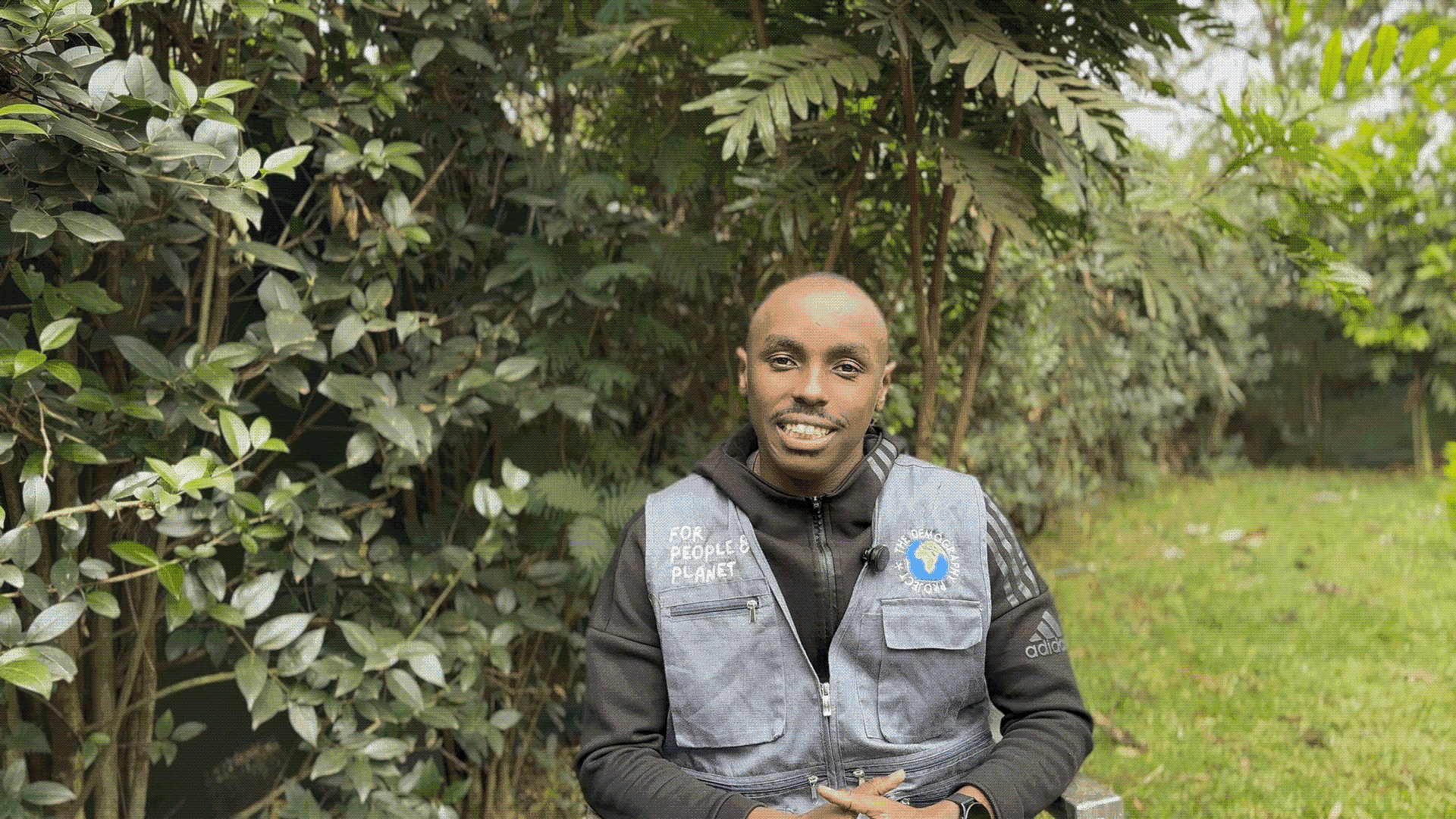
For the Demography Project, the COVID-19 pandemic and the drought that hit Kenya in 2021 revealed a problem that went beyond water shortages and public health – that communities often did not have enough local environmental data to understand what was happening around them.
The organisation, based in Kikuyu Municipality in Kenya, started by working with communities on water, sanitation and health. But its work gradually expanded to include data on freshwater resources, air pollution, weather and climate, putting communities at the centre of environmental data collection.
“We realized that we do not have sufficient data for effective community engagement on atmospheric and freshwater resources,” says Richard Muraya, Executive Director of the Demography Project. “So basically, the Demography Project went from a desktop kind of data journalism project to a direct community engagement citizen science platform.”
…the Demography Project went from a desktop kind of data journalism project to a direct community engagement citizen science platform.
This is what the organisation calls environmental democracy.
One of its early approaches was a simple mapping of boreholes and other water sources, identifying leaking pipes and involving communities in testing water quality. The work later expanded to communities living along the Nairobi River and around the Ondiri wetland, where residents have been involved in efforts to understand and reduce pollution.
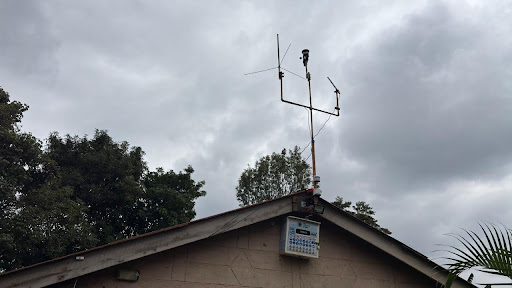
The same idea now runs through Uhai which is the organisation’s environmental data platform. Uhai, which means “life” in Kiswahili, brings together information from air quality monitors, noise meters, weather stations and other sensors.
Some of these devices are portable, meaning citizen scientists can carry them as they go about their daily lives, collecting GPS-linked information about the air they breathe and the noise they encounter. This can help show, for example, how much pollution or noise someone is exposed to during a trip in a matatu or while moving through different parts of a neighbourhood.
The Demography Project currently works with about 300 citizen scientists and says its developing dashboard has between 3,000 and 4,000 regular users. It is also working with researchers at the University of Manchester to explore the relationship between air pollution and respiratory health.
But collecting the data is not always easy. Sensors can be expensive to buy, maintain and calibrate, and equipment placed in communities can be damaged or stolen. There is also the challenge of explaining scientific data in a way that makes sense to people who are not scientists.
The Demography Project is part of the first cohort of the Digital Democracy Innovation in Sub Saharan Africa (DDISA) Fund, which supports organisations using technology and innovation to strengthen digital democracy across the region. As a tier two grantee, the organisation received financial support alongside capacity building workshops, technical assistance and opportunities to learn from other organisations in the programme. Muraya says the support has helped the team strengthen its science communication and rethink how it presents environmental data to different audiences.
“The Uhai project has more or less been able to address these core issues by enabling us to understand the terminology and how best to engage local communities on matters of environmental conservation and democracy,” he says. “We’ve been able to rebuild our open data dashboard so that you can be able to show or speak to both a scientific audience as well as a local audience.”
The Uhai project has [enabled] us to understand the terminology and how best to engage local communities on matters of environmental conservation and democracy.
For the Demography Project, however, the goal goes beyond building another dashboard. It wants communities to become part of the process of generating the data, understanding it and using it to take action.
In the coming years, the organisation hopes to expand this work through schools and vulnerable communities. Its bigger vision is for environmental data to move beyond reports and screens and become something ordinary people can use to make decisions about the places where they live.