
For many women, young people and persons with disabilities in Nigeria, being seen and heard in public life can begin with something as basic as having access to the right information – but the way in which people are represented in media can also shape how they are perceived and treated in society. It is this gap that the BO Foundation for Inclusive Media (BOFIM) is working to address through advocacy, digital inclusion and by building community.
Blessing Oladunjoye, Founder and Executive Director of BOFIM, says that one of the first steps towards inclusion is changing the ways persons with disabilities are portrayed.
“Charity approach is not the best way in which persons with disability should be reported in the media. Rather, it should be about the human rights approach,” says Oladunjoye.
This approach means moving away from stereotypes in both reporting and visual representation. People with disabilities are sometimes portrayed primarily through their disability, even when it has little or nothing to do with the story being told. Oladunjoye advocates for reporting that focuses on the person, their work, experiences and expertise, rather than using their disability as the defining feature of their representation.
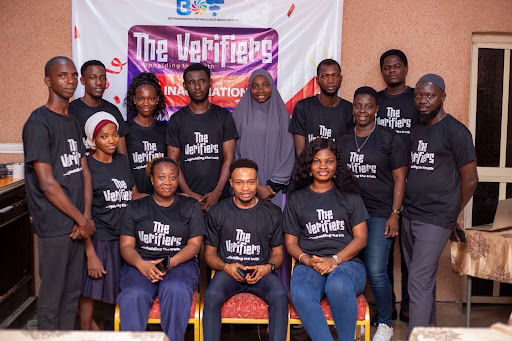
This extends into BOFIM’s work around information and misinformation. Through the organisation’s The Verifiers programme, journalists, young people, human rights defenders and disability advocates come together to learn about fact-checking and how to identify misinformation. This programme is particularly relevant when information affects communities that are already more vulnerable to exclusion or misrepresentation.
The organisation also works with students and persons with disabilities through education and assistive technology initiatives, recognising that having access to information is only useful when people have the tools and skills to engage with it.
For BOFIM, inclusion is not only about who can access information, but also about who is represented and who gets to participate in the conversations that follow. BOFIM wants women with disabilities to have opportunities to participate in democratic processes not only as voters, but also as advocates and candidates.
“We don’t want them to feel limited at any point in time for any reason,” says Oladunjoye.
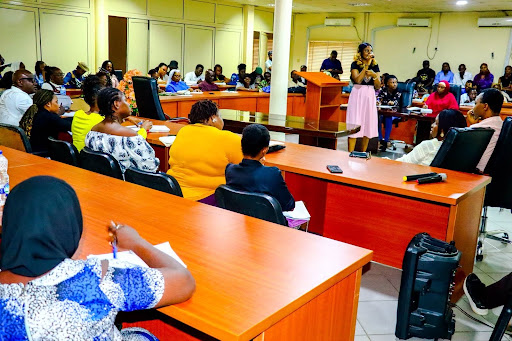
The organisation’s awareness campaigns and commemorative events provide another avenue for bringing issues affecting women, children and persons with disabilities into public conversations.
“Doing this work, however, requires resources – something that can be particularly difficult for smaller organisations,” Oladunjoye says.
BOFIM was looking for funding opportunities when it applied to the Digital Democracy Initiative Across Sub-Saharan Africa (DDISA) Fund. The programme has enabled the organisation to implement its work, but the support goes beyond the funding itself.
Regular communication with the DDISA team has given BOFIM a space to discuss its projects, work through challenges and receive guidance as the work progresses. The organisation has received both financial and technical support, including webinars and close communication with mentors who provide regular and reliable support. Oladunjoye says that when the organisation faces challenges, the team is able to reach out to DDISA, even through WhatsApp, for advice on how to move forward.
“We don’t just want to keep making those demands from time to time,” Oladunjoye says. “We want to see real impact.”
For BOFIM, creating more inclusive civic and information spaces is ultimately about bringing marginalised groups into public life as participants with valuable perspectives and experiences to contribute – not simply as subjects of discussion.